Buying a Teardown in Highland Park? The City Adds a Clock and a Check
October 15, 2026
October 15, 2026
"Since the last seven months that (demolition) application was pending, both the seller and the contract person have expended substantial sums preparing the redevelopment of that property." A lawyer for the party buying 175 Prospect Ave. said that at a Highland Park City Council meeting in September 2025, as The Record North Shore reported.
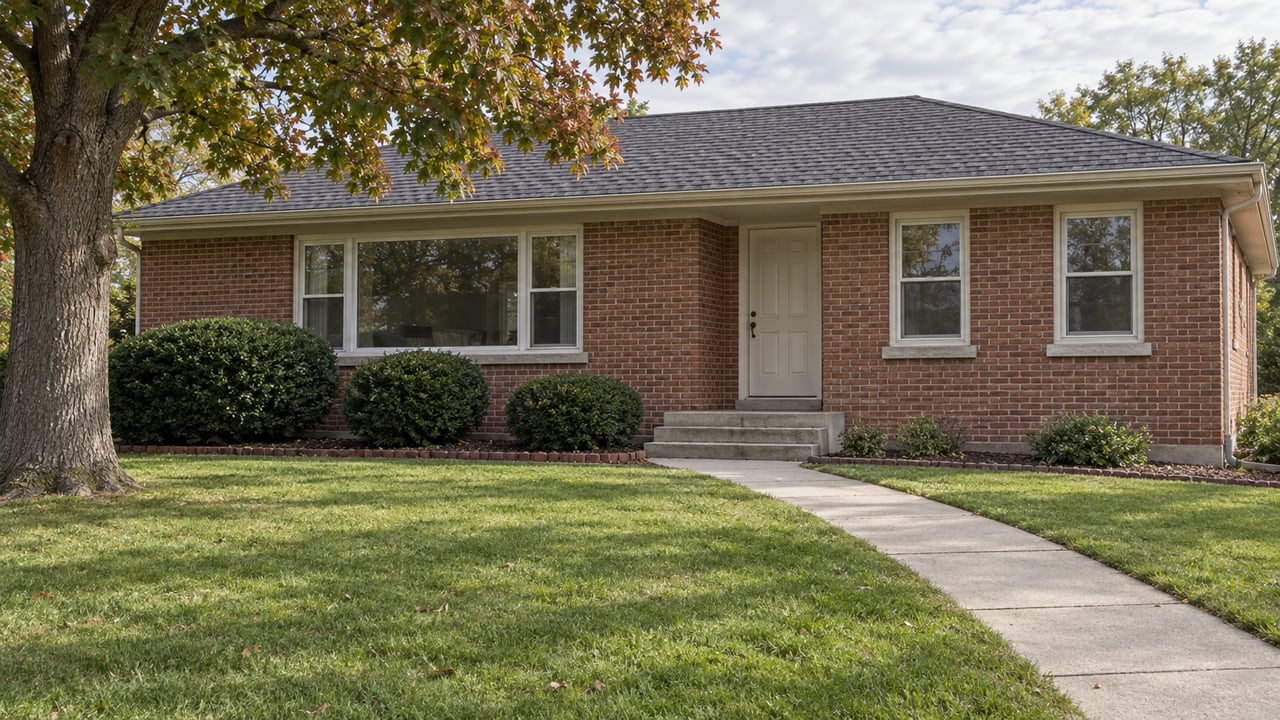
The house is a brick Colonial Revival that Howard Van Doren Shaw designed around 1909. It has six bedrooms and 6,760 square feet on a one-acre lot. The owners applied for a demolition permit in February 2025. In March, the Historic Preservation Commission voted unanimously that the house met seven landmark criteria and imposed a 365-day delay that ran to Feb. 14, 2026. For a full year, the buyer had a contract on a property it couldn't redevelop.
In Highland Park, the price of a teardown goes beyond the purchase price. It also includes a review period the commission sets by vote and a demolition tax the city raised for 2026. Neither cost shows up in the listing. Both follow from rules you can read ahead of time.
In February 2026 the city repealed and re-enacted its building code, Chapter 170, through Ord. O13-2026. Under the current version, Section 170.122 covers any residential building in the R1, R2, R3, R4, R5, R5A, R6, R7, RM1 and RM2 zoning districts. It has no year-built cutoff. Complete demolition applications in those districts go to the Historic Preservation Commission within 10 days.
The code allows one exception. A house rated "non-contributing" in the city's Comprehensive Architectural Survey can skip review, but only if the commission chair approves the application in advance and in writing.
"Demolition" also covers more than a full teardown. The code defines it as any act within the owner's control that removes or destroys 50 percent or more of the structure as it existed before the work started. A buyer who plans to keep the front wall and rebuild everything behind it can still end up in the same review as a buyer who clears the lot.
The commission has 60 days from the date the application is complete to meet and score the house against the city's landmark criteria. It also judges whether the house has enough integrity of location, design, materials and workmanship to be worth preserving. The score decides the delay.
| Commission finding | Delay on demolition |
|---|---|
| Four or more landmark criteria, with sufficient integrity | 365 days |
| Two or three criteria, with sufficient integrity | 180 days |
| One or no criteria, or insufficient integrity | None; the permit moves forward |
During any delay, no demolition permit can be issued and the structure can't be demolished. The city documents the house and publicizes the proposed demolition. The commission holds a public meeting to explain why the house matters and to discuss alternatives with the owner. The applicant can appeal to City Council in writing within 15 days. Council can uphold the delay, cut a 365-day delay to 180 days, or end it.
The detail that matters most for a contract is when the delay starts. The code starts it on the date the application is deemed complete, not on the date of the commission's vote. The city's own records show this. The commission imposed a 365-day delay on 1375 Sheridan Road at its Jan. 8, 2026 meeting, after finding the home met five of nine criteria. That delay expires Dec. 8, 2026, about eleven months after the vote. The time between filing and the hearing already counted toward the year.
Utilities follow a separate track. An application can be deemed complete before the city receives disconnection notices from the utility providers, but no demolition permit is issued until all of those notices arrive.
Who files also matters. The city's current Demolition Total Structure checklist asks for proof of ownership, owner authorization, a survey, a plan for protecting adjoining property, neighbor-notification and infill forms, and photos of every elevation. Applications go through the Civic Access Portal. Because of those requirements, the current owner has to be involved in any application. At 175 Prospect, the owners filed while a buyer was under contract, and both sides spent money during the seven months the application was pending. That is how the review period ended up running inside the deal.
The order of events looks like this:
Highland Park's annual fee resolution raised the demolition tax on a single-family house from $10,000 in FY2025 to $15,000 in FY2026, all of it going to the Affordable Housing Trust Fund. For multifamily buildings, the minimum rose from $10,000 to $15,000, and the charge for each unit beyond three rose from $3,000 to $5,400. The tax comes on top of permit fees and is due when the permit is issued.
Some older city documents haven't been updated. The demolition tax explainer linked from the city's Housing page is dated June 2006 and still says $10,000. The current permit checklist, updated April 23, 2026, lists $15,000.
Under the current code, who pays depends mostly on how long they have lived in the house and how long they plan to stay. The listed exceptions are:
As written, the exemptions favor people who already live in the house or who commit to living in the new one for years. A builder who buys, rebuilds and sells doesn't fit any of them. A household that buys an older house to rebuild for itself should read the ten-year provision closely with its own attorney, since the covenant and recapture terms apply for a decade.
The 365-day delay at 175 Prospect led to a broader fight. After the commission's March 2025 vote, neighbors nominated what would have been Highland Park's first noncontiguous historic district. It would have covered nine Shaw houses and three Frank Lloyd Wright houses, and it was filed on Sept. 3, 2025 with consent from 25% of the property owners. Buildings in a historic district can't be demolished. That same month, City Council changed the rule so that a noncontiguous district now needs consent from every property owner, as The Record North Shore reported. Contiguous districts still need 25%. The same article notes that Council took away the public's ability to nominate individual landmarks without the owner's consent back in 2018.
With those changes, the demolition delay is the main tool the city has left when an owner wants to take a house down. It slows demolition but doesn't prevent it. Landmark status now generally starts with the owner. In April 2026, the owners of 273 Sheridan Road, a 1936 French Eclectic house designed by William Betts with landscaping by Marshall Johnson, nominated it themselves, and Council made it a local landmark, The Record North Shore reported.
Landmark status doesn't freeze a property, but it adds review steps and can make them hard to predict. At 147 Central Ave., Council initially backed a plan to split a 4.3-acre landmarked estate into two lots of roughly 89,000 square feet each, one for the existing house and one for a new single-family home. The Historic Preservation Commission opposed the split, while the Plan and Design Commission supported it. On Sept. 14, 2026, Council sent the proposal back to the planning commission for a full public meeting instead of giving final approval, according to The Record North Shore. The Record listed Oct. 6 as the date of the next planning commission meeting.
Does a 1990s house go through demolition review? Yes, if it's in one of the covered residential zoning districts. Section 170.122 has no age threshold. The only way around review is a "non-contributing" survey rating plus the commission chair's advance written approval.
Does a major renovation count as demolition? It does if the work removes or destroys 50 percent or more of the existing structure. That definition covers both the review and the tax.
Can a delay be shortened? An appeal filed with City Council within 15 days can lead Council to uphold the delay, cut 365 days to 180, or end it.
When is the $15,000 due? When the demolition permit is issued, on top of the regular permit fees.
If you own an older Highland Park home and expect rebuild-minded buyers to be interested, the review rules can shape both your timeline and your contract. Chicagoland Real Estate Advisors can walk you through how review timing and the demolition tax affect a sale, starting with a free home valuation.
This article is general information, not legal, tax or financial advice. Consult a qualified professional about your situation.
Stay up to date on the latest real estate trends.