Chicago ADU Ordinance: What North Center and Lincoln Square Owners Should Know
September 24, 2026
September 24, 2026
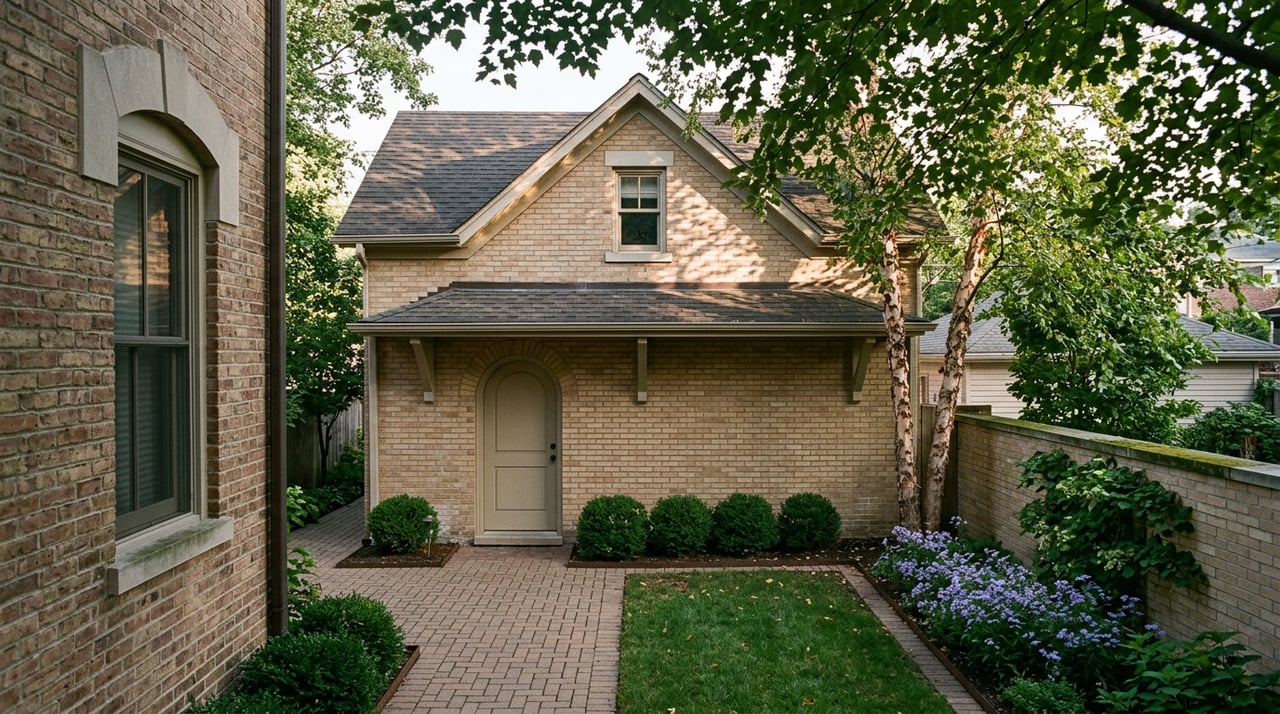
Did the coach house behind your two-flat just get more valuable? If you own property in North Center, Lincoln Square, or Ravenswood, the honest answer is: probably not as much as the news coverage this spring suggested.
On April 1, 2026, Chicago's five-year-old ADU pilot program became permanent and citywide, expanding the eligible area from roughly 12 percent of the city's residential and mixed-use land to about 60 percent, as Block Club Chicago reported, citing Abundant Housing Illinois co-lead Steven Vance. That is a genuinely large shift for neighborhoods on the Southwest Side or in parts of the city that never touched the original pilot boundaries. It is a much smaller shift here, because this stretch of the North Side was already inside the pilot's North Zone, and it was not a quiet participant. It was the most active ward in the entire program.
When the Chicago Sun-Times checked the city's Housing Department numbers in September 2022, the 47th Ward, covering North Center, Ravenswood, and Lincoln Square under Ald. Matt Martin, had more approved ADU projects than any other ward in Chicago: 52, out of 328 approved citywide through late August of that year. The only ward close behind was Ald. Daniel La Spata's 1st Ward in Wicker Park and Logan Square, with 50.
That head start came with structural advantages that other parts of the city didn't get. According to Chicago YIMBY, under the original pilot rules, the North and Northwest zones never required owner-occupancy to add a coach house or conversion unit, while the West, South, and Southeast zones did. The North and Northwest zones also had no cap on how many ADUs could go up on a single block each year, unlike the two-permits-per-block limit imposed elsewhere. And in a provision unique to those two zones, a homeowner could build a coach house on a vacant lot before the main house even existed.
According to Abundant Housing Illinois, the permanent ordinance folds the old pilot boundaries directly into the new citywide map. A homeowner two blocks outside that old boundary, in a part of the 47th Ward that was never in the pilot, needs to check eligibility under the new rules. That is the real geography lesson buried in this ordinance: it is not one Chicago-wide rulebook, it is a patchwork where your side of the street can matter more than your zip code.
The other headline out of this spring's coverage was that coach houses got roomier. That's true in the letter of the ordinance and mostly beside the point for a standard North Center lot.
| Pilot rule (2021-2026) | Permanent rule (April 2026 onward) | |
|---|---|---|
| Size cap | 700 sq ft, or 60% of rear setback, whichever was smaller | 60% of rear setback, no flat ceiling |
| Standard 25-ft city lot | About 450 sq ft, since setback math was already the binding number | About 450 sq ft, unchanged |
Under the pilot, a coach house could be no bigger than 700 square feet and no more than 60 percent of the property's required rear setback, whichever number was smaller. On a typical 25-foot-wide Chicago lot, that setback math already worked out to around 450 square feet, well under the 700-foot ceiling. The permanent ordinance drops the flat 700-foot cap and leaves only the setback formula. According to the Abundant Housing Illinois FAQ on the ordinance, owners with larger lots can now build bigger structures than the old rule allowed. Owners with standard lots, which describes most of North Center and Lincoln Square, are working with roughly the same square footage they always were.
That is not a reason to skip the idea. It is a reason to run the math on your own lot before assuming the rule change moves your project forward.
According to Chicago YIMBY, a permit issued this April on a property straddling Ravenswood and Lincoln Square shows what this looks like in practice. Ambala Holding LLC, which has owned a two-story, multi-unit building at 2203 West Giddings Street since 2019, received approval on April 17 to tear down the property's garage and replace it with a coach house holding one residential unit and three parking spaces. The reported cost was $120,000. Paul Ozga of New Space Architects in Kenilworth is the architect of record, and Sterling Group Inc. is the general contractor.
That figure is below broader 2026 cost estimates for the city: coach house projects typically run $150,000 to $350,000 in total, with new construction costing $200 to $400 per square foot and garage conversions running $150 to $300 per square foot. Basement or attic conversions typically land lower, in the $80,000 to $150,000 range. Chicago's clay soil and older building stock tend to push costs toward the higher end of those bands, especially for anything requiring new foundation work.
Adding a legal unit changes how the county sees your property, and that matters more here than the size cap does.
Cook County Assessor Fritz Kaegi has addressed the most common worry directly:
"Construction of a new ADU in one home will not cause higher assessments for neighbors who have not built ADUs."
Your own assessment is a different story. Adding an ADU can shift a property's classification, for example from a detached single-family home to a two-flat, and that reclassification can raise the assessed value tied to your own parcel. The offset is a Home Improvement Exemption that can shield a portion of the added value from reassessment for up to four years, giving an owner time to let rental income catch up with the new tax line before the full increase hits.
There are a few rules that apply everywhere in the city, regardless of zone or lot size. ADUs cannot be rented for stays under 32 days, so the short-term rental route is closed. No new off-street parking is required to add a unit, though if building the coach house means removing an existing required parking space, that needs a separate $500 administrative adjustment application through the city's Department of Buildings.
Lincoln Square lost 11.3 percent of its affordable rental units between 2018 and 2023, one of the fastest declines among Chicago's community areas, according to figures from Ald. Martin's office reported by Hoodline in August 2026. Much of that decline traces back to two-flat conversions and rising property values pricing out smaller rental units.
A legal ADU does not reverse that trend on its own, but it is one of the few tools a homeowner already living here has to add a rental unit without demolishing anything or waiting on a large multi-unit development to clear zoning. For an owner weighing whether to keep a garage as a garage or turn it into income property, the pilot program's five-year track record in this exact ward is the closest thing to a local case study Chicago has produced. Fifty-two approved projects is not a guess about what might work here. It already happened.
Will adding a coach house raise my neighbors' property taxes? No. The Cook County Assessor's office has stated that a new ADU on one property does not trigger higher assessments for neighboring homes that haven't added one.
Can I rent my ADU on Airbnb or a short-term platform? No. Chicago's ordinance prohibits stays under 32 days in any ADU, citywide, regardless of which pilot zone or opt-in area the property sits in.
Do I need to add parking if I build a coach house? No new off-street parking is required. If your project requires removing an existing required parking space, you'll need a separate administrative adjustment application with a $500 fee.
Does my lot need to have been in the original pilot boundary? If your property was already inside the North Zone, which covered parts of North Center, Lincoln Square, Ravenswood, Lake View, Edgewater, Uptown, and West Ridge, you carry the pilot's rules forward automatically. If you're just outside that boundary, your eligibility depends on whether your alderman has opted your specific block into the permanent program.
If you're weighing whether an ADU makes sense for a property you already own, or you're looking at a North Center or Lincoln Square listing that already has one, Chicagoland Real Estate Advisors can walk through what a given lot's setback math actually allows and what a coach house or conversion unit could mean for the property's value. Get a free home valuation to see where your numbers stand today.
This article is general information, not legal, tax or financial advice. Consult a qualified professional about your situation.
Stay up to date on the latest real estate trends.