Living On Or Near The Fox River In McHenry
May 7, 2026
May 7, 2026
Wondering what it’s really like to live on or near the Fox River in McHenry? For many buyers, the idea sounds simple until the details start to matter, like whether a home has true river frontage, how boating access works, and what floodplain rules could mean for your plans. If you are comparing waterfront homes with nearby neighborhoods, this guide will help you understand the tradeoffs so you can make a smarter move. Let’s dive in.
Living near the Fox River in McHenry offers a lifestyle that feels closely tied to the water. The city’s Riverwalk connects Boone Creek, Green Street, Riverside Drive, and Miller Point, and public piers at Miller Point give boaters a place to dock and enjoy downtown McHenry. The city also maintains a Miller Riverfront Boat Launch and 39 parks totaling more than 650 acres.
That access shapes everyday life in a way that many inland neighborhoods do not. You may be close to walking paths, launch points, seasonal events, and river views, even if your home does not sit directly on the water. In McHenry, proximity can still deliver a strong river-centered lifestyle.
The wider water network also matters. The nearby Chain O’Lakes is a major recreation draw with boating, fishing, camping, canoe and boat rentals, and kayak launches. If you enjoy being on the water, McHenry gives you access to a much broader boating and recreation system than one stretch of shoreline alone.
One of the biggest mistakes buyers make is assuming every home close to the river offers the same experience. In McHenry, there is a real difference between a parcel that actually fronts the Fox River and a home that is simply near river amenities. That difference can affect value, access, maintenance, and long-term costs.
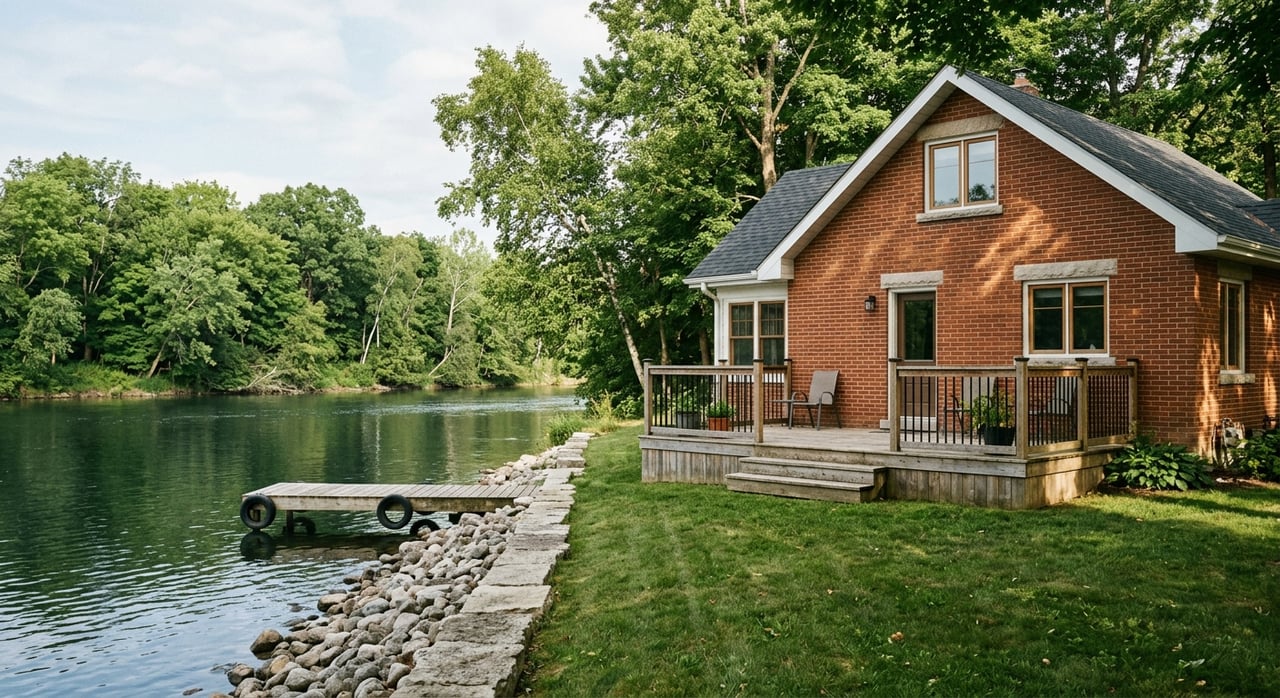
A true riverfront property usually means the parcel itself reaches the water. A near-water home may be a short walk or drive from the Riverwalk, public piers, or the Miller Riverfront Boat Launch, but it does not necessarily include private frontage, dock rights, or direct access. Since public river access is limited along the corridor, this distinction matters more than many buyers expect.
Before you assume a property has water rights or dock potential, verify it. McHenry County’s Athena viewer and county mapping tools can help you review parcel data, floodplain layers, wetlands, topography, and aerial views. Still, frontage, easements, and access should be confirmed through the deed and a survey rather than relying only on an online map.
If you picture a quiet waterfront all year, it helps to know that the Fox River lifestyle in McHenry is highly seasonal. The Stratton-Bolger Lock and Dam operates from May 1 through October 31, and about 17,000 boats pass through annually on average. In warm months, the area feels more active on the water and around nearby access points.
That seasonal rhythm can be a plus if you want energy, boating traffic, and summer activity. It can also be something to think through if you prefer a quieter setting. Main corridors like Route 120 and Route 31 carry a combined 52,000 vehicles per day, and summer programming at Miller Point adds to the livelier feel.
There are also operating rules to keep in mind. Boats using the Chain O’Lakes need a Fox Waterway Agency sticker, and the Chain itself does not have a horsepower limit. For buyers who plan to boat often, those details are part of the real cost and convenience picture.
For riverfront and near-river homes, flood risk is not a side issue. It is part of the ownership math from day one. Most standard homeowners insurance policies do not cover flood damage, and flood insurance through the National Flood Insurance Program typically has a 30-day waiting period before coverage begins.
At the local level, McHenry County regulates floodplain and stormwater issues through its Stormwater Management Ordinance. The county states that all development within a floodplain requires a permit, and development in a flood hazard area or within wetlands or waters may require a Stormwater Management Permit. That can affect future plans for additions, site work, or shoreline improvements.
Illinois also regulates certain work in and along public waters. The state notes that the local building official can help determine whether a site is in or near a floodplain, and state permits may apply to construction in designated floodways and activities in and along public bodies of water. For buyers, the main takeaway is simple: what you can do with a riverfront property may depend on more than the lot itself.
Waterfront living in McHenry is not static through the year. The Stratton Lock and Dam closes each winter from November 1 through April 30, and winter drawdown begins on November 1 and continues through December 1. That means water levels are actively managed rather than fixed.
For homeowners, this can change how the shoreline looks and functions in late fall and winter. Dock owners may need to think about how seasonal water changes affect use, storage, and maintenance. Even if you love the summer waterfront feel, it helps to picture the property in more than one season.
McHenry’s river housing has deep roots. In the late 19th century, the city became a popular tourist destination, and families built summer cottages along the Fox River. Over time, many of those cottages were converted into year-round homes, remodeled, or expanded.
That history creates a varied housing stock today. You may see older cottages, updated older homes, and more conventional detached houses rather than one standard waterfront style. The county’s documented residential history includes cottage forms, I-houses, Colonial Revival, Dutch Colonial Revival, Queen Anne, Upright-and-Wing, and Greek Revival homes.
For buyers, that variety can be exciting, but it also means every property should be evaluated on its own merits. Two homes near the water may offer very different layouts, maintenance needs, and improvement history. A charming older home can be appealing, but you will want a clear picture of condition, updates, and site constraints.
McHenry’s average home value was about $306,004 in late March 2026, and the city’s median listing price was about $300,000. Waterfront inventory is a smaller and more specialized part of that market. That usually means you should think beyond the list price and focus on total ownership cost.
For many buyers, the extra costs are practical rather than surprising. Boat stickers for the Chain O’Lakes are required annually, with 2026 fees ranging from $20 for non-motorized craft to $250 for larger boats, plus possible processing fees. Depending on location and lender requirements, flood insurance may also be part of your monthly housing budget.
Summer activity can be another tradeoff. A home near popular river access may offer convenience and lifestyle value, but it can also come with more traffic, more seasonal noise, and a busier atmosphere. In other words, the best fit depends on whether you want direct access, easy access, or just proximity to the water without the full waterfront responsibilities.
The right home depends on how you want to use the river. If private frontage and direct boating access are your top priorities, a true riverfront lot may be worth the extra planning and due diligence. If you mainly want to enjoy the Riverwalk, parks, downtown access, and occasional boating, a nearby home may offer a simpler and more flexible option.
A helpful way to compare homes is to rank your priorities before you tour. Think about whether your top goal is views, docking, walkability to downtown, lower maintenance, or easier budgeting. When you know what matters most, it becomes much easier to filter out homes that look exciting online but do not match your day-to-day needs.
For buyers and sellers in McHenry, local context matters. A riverfront address, a home near Miller Point, and a property a few blocks inland can all appeal to different buyers for different reasons. Understanding those differences is key to pricing accurately, negotiating well, and moving forward with confidence.
If you are thinking about buying or selling on or near the Fox River in McHenry, working with a local team can help you sort through access, lot details, market context, and the practical costs that come with waterfront living. Connect with Chicagoland Real Estate Advisors for personalized guidance and a client-first approach.
Stay up to date on the latest real estate trends.